Abcd Ref 3d Shapes Font: A Creative Typeface for Educational Design
I was recently working on a new STEM activity guide when I realized that the standard fonts just weren’t doing it. The content was informative, but the visuals lacked that spark of curiosity and engagement we wanted to inspire in students. That’s when I discovered Abcd Ref 3d Shapes, a 3D Shapes Geometry Dingbats Font specifically designed for educational materials. From the moment I opened it in my design software, I knew this was more than just another Fonts addition to my toolkit—it was a game-changer.
Abcd Ref 3d Shapes for Math Worksheets and Hands-On Learning
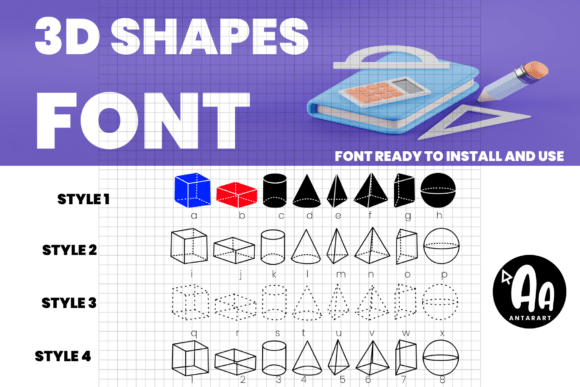
Abcd Ref 3d Shapes is part of a growing trend in educational design—using visual language to enhance learning outcomes. This Dingbats typeface doesn't just present letters; it brings geometry to life through bold, stylized 3D forms. When building math worksheets or printable guides, using Abcd Ref 3d Shapes immediately elevates the layout from ordinary to interactive. Students aren’t just reading—they’re seeing shapes, which helps reinforce concepts like volume, surface area, and spatial reasoning.
In practice, I used Abcd Ref 3d Shapes as a header font for a geometry lesson titled “Exploring 3D Figures.” The title alone caught attention with its playful yet precise structure. It created a sense of excitement without being overwhelming, making it perfect for younger audiences while still maintaining a professional feel for educators. The rhythm of the characters supports clear visual hierarchy, ensuring each section of the worksheet felt distinct and purposeful.
Creating Engaging STEM Activities with Abcd Ref 3d Shapes
STEM activities often require a balance between creativity and clarity. Abcd Ref 3d Shapes leans into that balance beautifully. As a decorative accent in a science-based newsletter, I paired it with a clean sans serif body text to maintain readability. The result? A fresh, modern look that didn’t compromise on usability. The Fonts also worked well in pull quotes for activity highlights, such as “Design Your Own Polyhedron,” where the 3D effect added an extra layer of interest.
The character set includes not only alphabetic dingbats but also geometric icons and symbols, which are incredibly useful for labeling diagrams or creating quick reference cards. In one instance, I used the shape glyphs to indicate different types of problems within a single worksheet—cube for basic questions, sphere for advanced, and pyramid for challenge prompts. This subtle but effective use of Abcd Ref 3d Shapes helped organize the content visually, reducing cognitive load and increasing user-friendliness.
Abcd Ref 3d Shapes in Course PDFs and Digital Magazines
For digital magazines focused on education and innovation, the right Fonts can set the tone before a single word is read. I tested Abcd Ref 3d Shapes in a feature article about emerging trends in classroom tech. Used for chapter openers and subheadings, the font introduced each section with a touch of personality, signaling that the content would be both informative and creative.
Its editorial appeal lies in how it bridges the gap between function and fun. While it's clearly a Dingbats style, it avoids the overly whimsical traps that many similar fonts fall into. Instead, it offers a structured yet dynamic presence that aligns well with the serious nature of STEM while keeping the layout approachable. On screen, it reads cleanly at larger sizes, and in print, the depth of the shapes adds a tactile quality to the page.
Printable Planners and Educational Branding
If you're involved in creating printable planners or workbooks aimed at students or educators, Abcd Ref 3d Shapes could become a core element of your brand identity. I’ve seen it used effectively in headers and decorative accents across several projects, including a coaching workbook that emphasized hands-on learning. The font brought a unique energy to the design, helping establish a consistent and memorable editorial mood.
One standout example was a monthly planner template where I used Abcd Ref 3d Shapes for weekly titles and activity prompts. The three-dimensional glyphs gave the pages a sense of motion and interactivity, encouraging users to engage with the content more deeply. For those who want their publications to stand out, this Fonts package offers a strong visual anchor that can define a publication’s identity without overshadowing the message.
Font Pairing Tips for Abcd Ref 3d Shapes
Because Abcd Ref 3d Shapes is a display Fonts, it shines brightest when used alongside more neutral typefaces. In most of my layouts, I paired it with a simple sans serif like Helvetica Neue or a classic serif such as Georgia for body copy. These combinations ensured that the main text remained easy to read while the headers retained the engaging geometry of Abcd Ref 3d Shapes.
- Use Abcd Ref 3d Shapes with a clean sans serif for modern, minimalist designs.
- Pair it with a traditional serif for contrast and a balanced editorial layout.
- Avoid using it for long-form text—its expressive nature isn’t suited for dense paragraphs.
- Consider using it in combination with other Dingbats for themed sections or decorative elements.
This kind of font pairing allows the designer to maintain readability while leveraging the emotional impact of a creative typeface. In newsletters, blog headers, and even social media graphics, the right combination can help elevate your brand and capture attention quickly.
Readability and Use in Multi-Platform Projects
While Abcd Ref 3d Shapes is highly expressive, it still performs well across various platforms. On mobile devices, the bold strokes and defined outlines make it legible at smaller sizes—though again, it’s best reserved for headlines and accents. When exporting to PDF or preparing for print, the font retains its crispness, which is essential for any educational or commercial Fonts used in downloadable resources or printed handouts.
I found that the font works especially well in short bursts of text, like chapter headings or call-out boxes in a digital magazine. Its visual weight helps draw the eye, making it ideal for editorial designers looking to break up large blocks of text without sacrificing flow. However, if you’re designing something with small captions or dense data tables, you’ll want to switch to a more utilitarian Fonts to preserve clarity.
Commercial Use and Licensing Considerations
Before diving into a client project or launching a paid course, it’s important to check the licensing details for Abcd Ref 3d Shapes. Since it's a commercial font, it can be used in templates, printables, and digital downloads—but always verify the terms to ensure compliance. I personally appreciate the flexibility of having access to multiple weights and alternates, which allowed me to tailor the Fonts to different sections of a publication with ease.
Additionally, the included multilingual support makes it suitable for international educational brands or content creators targeting diverse audiences. Whether you're crafting a Fonts-driven branding system for a tutoring business or designing a globally accessible math resource, these details matter.
When Not to Use Abcd Ref 3d Shapes
Despite its strengths, Abcd Ref 3d Shapes isn’t a one-size-fits-all solution. It’s a display Fonts meant for visual impact rather than extended reading. I noticed that when applied to body copy, especially in low-resolution environments like email clients or older devices, the text became harder to parse. The same goes for small captions or footnotes—stick to a simpler typeface there.
Also, avoid using it in formal reports or academic journals unless you're going for a very specific aesthetic. Its playful geometry might clash with the seriousness of such documents. Think of Abcd Ref 3d Shapes as a tool for engagement rather than a full typography solution.
Final Project Integration and Real-World Results
In a recent redesign of a digital course PDF for elementary geometry, I made Abcd Ref 3d Shapes the cornerstone of the visual identity. Used in all major headers and pull quote boxes, it helped create a cohesive and stimulating environment for learning. The feedback from educators was positive—they appreciated how the font made complex ideas more accessible and fun.
Another case came up while working on a printable planner for homeschool families. The planner featured weekly goals, activity schedules, and reflection prompts. By using Abcd Ref 3d Shapes for section dividers and chapter titles, the final product felt both organized and imaginative. Parents loved the blend of professionalism and playfulness, and it became a key selling point in our marketing materials.
What I love most about Abcd Ref 3d Shapes is how it encourages designers to think beyond the basics. It’s not just about choosing a pretty Fonts—it’s about using typography to support the message, whether that’s a child learning about pyramids or a teacher planning a unit on symmetry.
As someone who frequently works with educational content, I recommend considering Abcd Ref 3d Shapes for your next project. Whether you're building a Dingbats-style logo, adding flair to a blog post, or designing a set of math activities, this font brings a level of creativity that enhances both the form and function of your publication.