Arcadian Typeface Review: A Refined Serif for Elegant Brand Identity
I opened a blank document on my monitor, the cursor blinking against a sterile white background. The client brief was simple but demanding: create a visual identity for a new artisanal skincare line that needed to feel grounded yet luxurious. No trendy geometric sans-serifs, no overly ornate calligraphy—just something that whispered rather than shouted. I dragged Arcadian into the canvas. It wasn’t an immediate "aha" moment, but as I adjusted the tracking and placed it alongside a minimalist logo mark, the quiet refinement of the typeface began to anchor the entire composition. This is not just another serif font; it is a tool for designers who understand that elegance often lies in balance.
Arcadian Serif Font Characteristics and Humanist Proportions
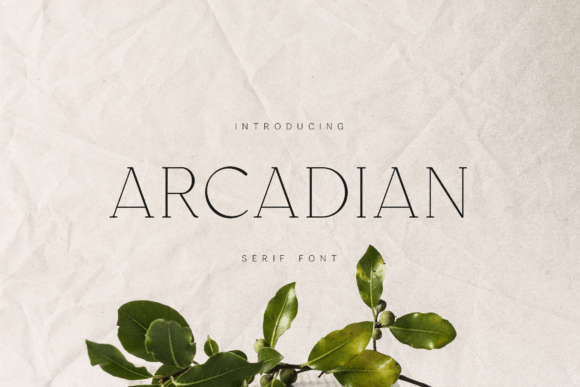
When you first load Arcadian, its personality is defined by its humanist proportions and gentle contrast. Unlike high-contrast Didones that can feel fragile or overly dramatic at smaller sizes, this typeface maintains a sturdy, readable structure while retaining grace. The letterforms are balanced, with curves that sweep naturally, mimicking the rhythm of hand-drawn calligraphy without sacrificing the precision required for modern digital design. As a designer reviewing this font, I appreciate how it avoids the stiffness often found in traditional classics. Instead, it offers a warmth that makes brand messaging feel approachable yet sophisticated. The gentle modulation of stroke weight gives it a timeless quality, making it suitable for projects where longevity and tasteful aesthetics are paramount.
Arcadian for Skincare Packaging and Product Labels
In our fictional skincare project, I tested Arcadian on a mockup of a matte cream jar label. Serif fonts have long been associated with premium beauty products, but many fail to stand out on crowded shelves. Arcadian succeeded because its elegant classic serif style provided enough visual weight to be legible from a distance, while its graceful curves added a tactile sense of luxury up close. I paired it with ample negative space, allowing the typography to breathe. The font’s ability to convey quiet refinement meant that the packaging didn’t need loud colors or complex graphics to communicate value. For handmade sellers and small business owners looking to elevate their product labels, using a creative font like Arcadian can significantly enhance perceived value without requiring a complete rebranding budget.
Arcadian in Digital Branding and Web Design Headers
Transitioning from print to screen, I applied Arcadian to a website header for a boutique creative studio. Web design often demands fonts that render sharply across various devices, and Arcadian delivered consistent performance. Its balanced letterforms ensure excellent readability even when used for short headlines or navigation elements. I noticed that when used as a display font for hero sections, it commanded attention without overwhelming the user interface. However, it is crucial to remember that while Arcadian is versatile, it may not be ideal for long-form body text due to its stylistic flair. For supporting typefaces in web layouts, I recommend pairing it with a clean sans-serif font to maintain visual hierarchy. This combination allows the serif font to serve as the emotional hook, while the sans-serif handles the informational density.
Arcadian for Wedding Invitations and Editorial Design
The versatility of Arcadian extends beautifully into editorial design and stationery. I experimented with placing the font on a wedding invitation suite, testing both all-caps settings and lowercase variations. The font’s natural elegance makes it a strong candidate for formal events where tone is everything. It avoids the cliché of overly script-heavy designs, offering instead a structured sophistication that feels contemporary. When designing flyers or posters for cultural events, such as gallery openings or literary festivals, Arcadian adds a layer of intellectual charm. Its humanist roots connect well with audiences who appreciate heritage and craft, making it a strategic choice for brands targeting discerning consumers who value authenticity over fleeting trends.
Arcadian Font Pairing and Versatility in Modern Typography Systems
No font exists in isolation, and part of my review process involved testing Arcadian against other typefaces. It pairs exceptionally well with modern typography systems that rely on contrast. For instance, combining Arcadian with a geometric sans-serif creates a dynamic tension between organic warmth and structural rigidity. I also found success pairing it with subtle handwritten fonts for accent words, leveraging Arcadian’s stability to ground more playful elements. This flexibility makes it a valuable asset in a designer’s toolkit, whether you are building a comprehensive brand identity or assembling quick social media graphics. The key is to let Arcadian lead in moments where brand perception needs to be established, then step back to let other fonts handle functional communication.
Practical Considerations for Commercial Use and Licensing
Before integrating Arcadian into final client work, it is essential to review the included styles, weights, and file formats. Most premium font packages offer multiple weights and perhaps some alternates or ligatures that can add unique character to logo design projects. Ensure you check for multilingual support if your branding targets international markets. Furthermore, always verify commercial font licensing terms. Using a creative font in digital products, print-on-demand merchandise, or templates requires proper authorization to avoid legal complications. By treating Arcadian as a professional investment rather than just a decorative element, designers can leverage its elegant classic serif qualities to deliver high-end results that resonate with audiences and justify premium pricing for their services.