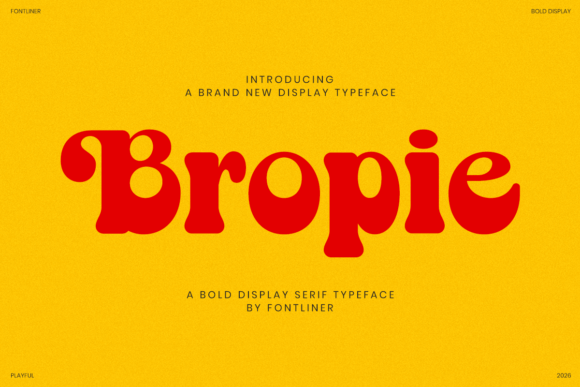
Bropie: A Bold Display Serif for Retro Branding
I opened a blank artboard this morning, staring at the white void that every designer knows too well. The project was a visual refresh for a boutique skincare line called Lumina Botanicals, and the brief was specific: they wanted to move away from their sterile, minimalist past and embrace something warmer, more nostalgic, and undeniably human. I needed a typeface that could carry weight without feeling heavy, one that whispered of vintage editorial headlines but screamed modern confidence. That is when I pulled up Bropie. From the moment I dragged it onto the canvas, I knew this serif font had found its home.
Bropie for Nostalgic Packaging Design
When I first tested Bropie on a mockup of the product’s primary packaging label, the contrast against the matte kraft paper background was striking. As a bold display serif typeface, Bropie radiates playful confidence in a way that few other fonts manage to balance. It doesn’t just sit there; it commands attention while maintaining an air of retro charm that feels authentic rather than forced. For packaging design, where shelf presence is everything, this distinction is critical. The thick, expressive strokes of the letters create a strong visual hierarchy, ensuring that the brand name pops even from a distance. Unlike many modern sans-serif trends that can feel cold or clinical, Bropie brings a tactile, almost hand-printed quality to digital files, which translates beautifully when printed on physical labels. It bridges the gap between high-end editorial aesthetics and approachable, artisanal branding.
Bropie for Editorial Headlines and Social Media Graphics
One of the most compelling aspects of using Bropie in a contemporary workflow is its versatility across digital platforms. I placed the font in the hero section of a landing page draft for the client’s website, and immediately, the tone shifted from corporate to conversational. Because it draws inspiration from expressive branding from the golden era of print, Bropie carries a sense of history that resonates with audiences fatigued by generic tech aesthetics. When I scaled it down for Instagram story templates and social media graphics, it retained its legibility and character. This is not a font that loses its soul when resized; it remains a creative font capable of anchoring short phrases, quotes, and call-to-action buttons. For content creators and marketers looking to inject personality into their feed, Bropie offers a distinctive voice that stands out in a crowded scroll. It works particularly well as a headline font, allowing designers to use lighter weights or complementary sans serif fonts for body copy to maintain readability.
Bropie for Logo Design and Brand Identity Systems
The true test of any premium font is how it performs as the cornerstone of a brand identity. I experimented with Bropie for the Lumina Botanicals logo concept, exploring both all-caps settings and title case variations. The serifs have a unique, slightly irregular flair that prevents the design from feeling too rigid or algorithmic. In logo design, this human touch is invaluable for brands aiming to appear established yet friendly. However, as with any bold display serif, restraint is key. While Bropie is fantastic for logotypes and large-scale applications like shop signs or posters, it is less suitable for long-form body text or small-size UI elements. My advice for brand designers is to treat Bropie as an accent font or a primary display typeface, pairing it with a clean, neutral sans serif font for informational text. This combination creates a balanced typography system that leverages Bropie’s charm without sacrificing functional readability. When building a brand board, you will find that Bropie sets the mood instantly, communicating values of heritage, quality, and approachability before the viewer even reads the tagline.
Bropie for Business Cards and Print Collateral
I also sent a batch of business card proofs to my local printer to see how the ink laid down on different stock options. The result was impressive. The bold nature of the font meant that the negative space around the letters felt airy and intentional, preventing the card from looking cluttered. For entrepreneurs and small business owners who want their stationery to leave a lasting impression, Bropie delivers a professional yet memorable look. It elevates standard assets like letterheads, flyers, and event invitations, turning them into design statements. The font’s ability to evoke nostalgic packaging makes it an excellent choice for businesses rooted in craftsmanship, such as bakeries, coffee roasters, or handmade jewelry shops. By choosing Bropie, these businesses signal that they value tradition and detail, appealing to customers who seek authenticity over mass production.
Practical Considerations for Using Bropie
Before integrating Bropie into your final client work, it is essential to review the included styles and file formats carefully. Most commercial font packages offer multiple weights and perhaps some alternates or ligatures that can add extra flair to your designs. Testing these variations in a real-world context—such as placing them on a website header or a product box—will help you determine which characters best suit your specific aesthetic. Additionally, always check the licensing terms. While Bropie is a versatile tool for digital and print projects, understanding whether you need a webfont license or a commercial merchandise license is crucial for legal compliance. Whether you are a freelance graphic designer, a creative studio, or a hobbyist crafter selling on Etsy, proper licensing ensures you can use these design assets with peace of mind. Ultimately, Bropie is more than just a collection of glyphs; it is a strategic design decision that can define the personality of your brand. If you are looking to infuse your projects with retro charm and bold confidence, this serif font is a worthy addition to your toolkit.